
What Therapy Looks Like
Art and expressive work. Drawing, painting, and creating give children and teens a way to externalize feelings that are hard to say out loud. Expressive work also lowers the pressure of a session — many kids find it easier to talk while their hands are busy.
And whatever else fits. Every child is unique, and their therapeutic needs will likely evolve over time. As appropriate, we will incorporate mindfulness techniques, cognitive behavioral therapy (CBT) and dialectical behavioral therapy (DBT) skills, sensory regulation techniques, social skills practice, and behavioral supports.
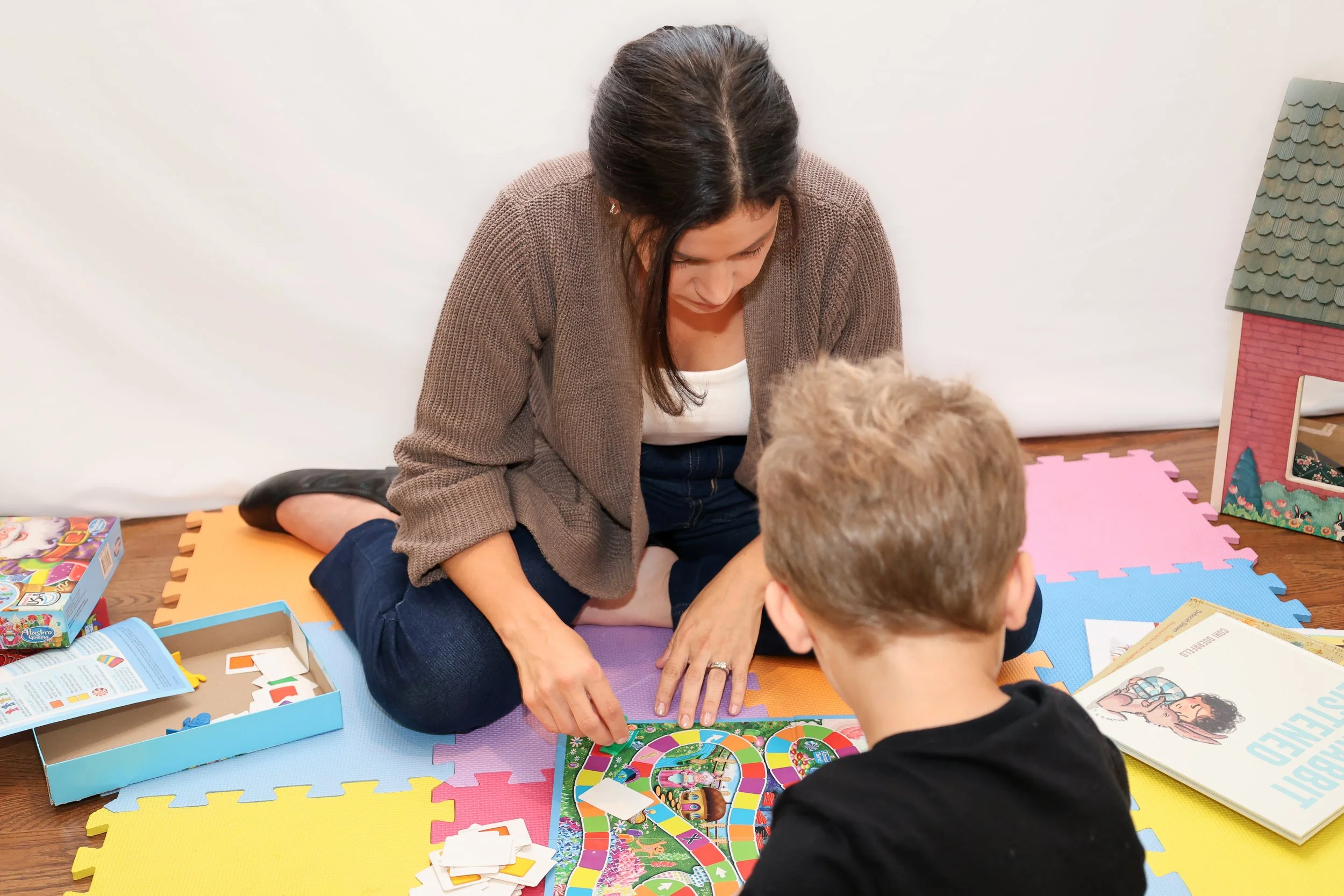
Therapeutic play. For younger children, play is not a break from the real work — it is the work. Play is how children process experiences they don't yet have words for. Through play, a child can explore feelings that would be overwhelming to discuss directly, practice new ways of handling hard moments, and build a sense of mastery over things that feel out of their control. We watch what comes out in play and use it to help your child make sense of their world.
Talk therapy. As children grow, words become a more natural communication tool. With teens especially, we spend time simply listening — often the first thing a teenager needs is an adult who takes them seriously and isn't there to lecture. From that foundation, we help them name what they're feeling, understand patterns in their relationships and reactions, and think through choices.